

Check Coverage Before Counting Pads
Moving blankets help separate finished surfaces from the rubbing and contact that happen during a move. The useful question is not simply how many blankets fit a bedroom. It is whether the actual pads cover the surfaces and corners of the furniture you are taking.
Quick answer: Estimate moving blankets from the furniture inventory and check coverage before the move. The illustrative six-piece inventory below allocates 10 pads, with two spare pads bringing the planning total to 12. Those quantities are assumptions for the example, not a bedroom-size rule. Wrap clean, dry furniture, secure the padding without adhesive on the finish, and use suitable lifting and vehicle-restraint equipment separately.
Padding, Carrying and Restraint Are Three Different Jobs

Padding protects surfaces
A clean moving pad separates surfaces from scuffing and rubbing. It cannot make a fragile object immune to pressure, impact or a fall.

Lifting equipment supports the move
A blanket is not a lifting sling. Use suitable handling equipment and enough capable help for the item and access route; do not improvise a carry from the pad’s edges.

Vehicle restraint limits movement
A wrapped item still needs a suitable loading and restraint plan. Padding is not a substitute for securing goods in the vehicle.
Count Pads by Item, Then Test the Fit
Walk around each item after wrapping it. If an edge, corner or finished surface remains exposed, revise the count. Use the manufacturer’s dimensions for the pads you actually have; products differ.
| Illustrative item | Pieces | Pads allocated in this example | Reason to verify |
|---|---|---|---|
| Sofa | 1 | 2 | Cover arms, back and exposed finish |
| Dining table | 1 | 2 | Cover top and separately handled parts |
| Dresser | 1 | 1 | Check corners and full body coverage |
| Small cabinet | 1 | 1 | Confirm doors and finish are protected |
| Bookcase | 1 | 2 | Check height and exposed edges |
| Headboard | 1 | 2 | Check width and protruding details |
Illustrative arithmetic: 2+2+1+1+2+2=10 pads for six pieces; add two spare pads for an example total of 12. Actual pad sizes, furniture shapes and handling requirements determine your count.
How to Use Moving Blankets in Four Steps
Inspect and prepare
Use clean, dry pads. Remove loose debris from the item, check its condition and follow any manufacturer-specific handling instructions.
Cover the exposed surfaces
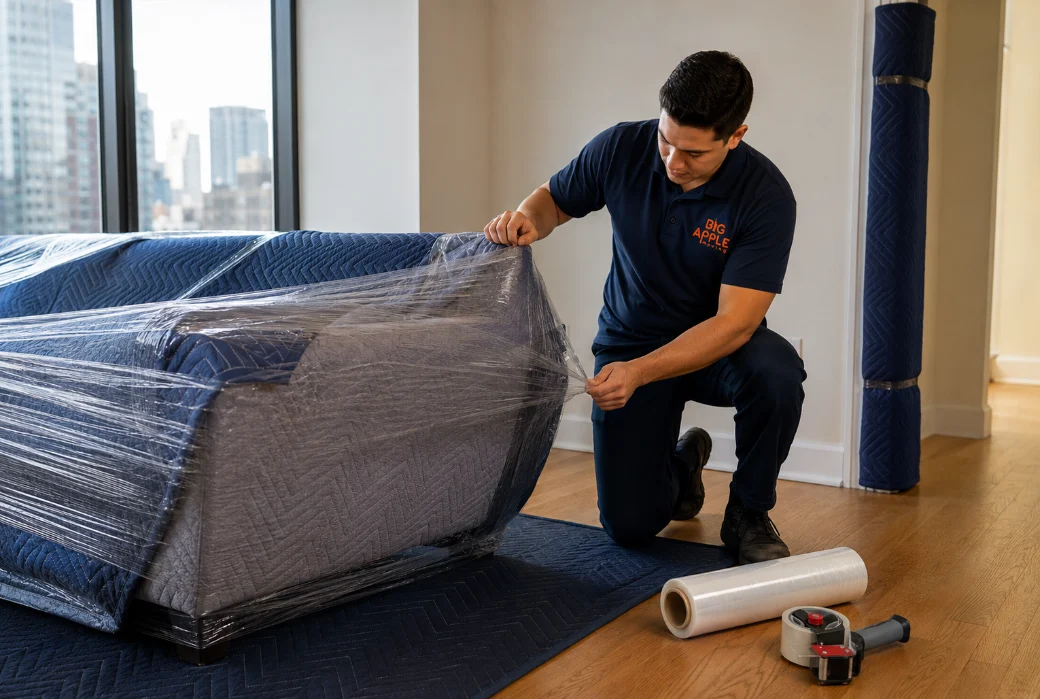
Drape and overlap enough padding to cover the vulnerable areas. Treat removable or projecting parts according to the item’s handling plan.
Secure the padding
Hold the pads in place using suitable wrapping or securing materials. Keep adhesive off the furniture’s finish, and do not tighten materials in a way that stresses delicate parts.
Check before carrying
Confirm that the padding stays in place and that the intended handholds and route are usable. Plan the lift and loading separately from the wrapping.
Measure the Route With the Padding in Mind
A tightly fitting doorway does not become easier after an item is wrapped. Measure the furniture, entrances and difficult turns, and discuss disassembly or another handling plan before the move. Do not remove needed protection simply to force an item through a tight opening.
Keep hallway and stair routes clear. Loose blankets on walking surfaces can create a slip or trip hazard; floor protection is a separate job. On a BAM move, crews supply and lay floor protection when the job or building needs it. See our floor-protection guide and furniture-wrapping guide for those specific tasks.
Six Blanket Mistakes to Catch Before Loading
Dirty pads
Grit trapped against a finish defeats the purpose of padding. Inspect both the pad and the surface.
Exposed corners
A blanket over the top is not full coverage. Check the side that will face a doorway or neighboring item.
Tape on the finish
Secure the protective layers without sticking adhesive directly to the furniture.
Blankets as rainproofing
Do not assume fabric padding is waterproof. Plan protected loading and appropriate materials for the item and conditions.
Blankets as lifting gear
Do not carry a heavy object by gathering a pad around it. The pad is not rated lifting equipment.
Wrapped means secured
A padded object can still move in the vehicle. Confirm the loading and restraint plan separately.
How to Use Moving Blankets — Frequently Asked Questions
They provide a protective layer against rubbing and surface contact during handling and transport. They do not guarantee protection from drops, structural stress or every type of damage.
Count the furniture pieces, then check how many actual pads cover each one. Add reserves for gaps found during the fit check. The six-piece, twelve-pad example is a planning illustration, not a universal allowance.
Household blankets vary in thickness, cleanliness, size and durability. Check whether the material actually covers and protects the item; do not assume it performs like a purpose-made moving pad.
Use suitable wrapping or securing materials over the padding, keeping adhesive away from the finish. Check that the pad remains in place without excessive pressure on fragile parts.
Do not assume so. Check the particular product’s specification and plan for weather exposure separately. Wet padding should not be left against furniture.
Do not treat a blanket as a universal floor-moving tool. Surface type, load and stability matter, and loose fabric can create hazards. Use an appropriate floor-protection and handling plan.
No. Padding and vehicle restraint serve different purposes. Wrapped goods still need an appropriate loading position and suitable restraints.
Yes. Big Apple Moving includes “Wrapping (blankets, tape, shrink)” on every piece of furniture in the moving price, along with TV boxes and picture bins. Dollies, appliance hand trucks, straps and blankets are standard equipment on every truck. Cartons and packing supplies for customers who pack themselves are not included; materials form part of the packing fee when packing is hired. Plastic bin rental and custom crating are separate services.


