

Sort the Shipment Before Packing
A storage checklist needs more than a list of forbidden objects. Some goods create a hazard, some depend on the provider’s written acceptance rules, and some are perfectly ordinary possessions that you cannot afford to lose access to during a move.
Quick answer: Use a 3-way sort before storing belongings between NYC moves: exclude hazards and perishables, confirm uncertain items in writing, and keep essentials with you. BAM’s terms exclude hazardous materials, illegal goods and perishables. Keep passports, medication, keys and daily work equipment outside the storage shipment; access to stored belongings requires advance notice and an available appointment, and retrieving specific items may involve handling fees.
Keep These Six Categories Out of the Household Shipment
BAM’s customer service terms exclude hazardous materials, illegal goods, perishables and items that pose a health or safety risk. The six categories below also include belongings that need preparation or a separate care plan; they are not six identical contractual bans.

Fuel and hazardous chemicals
Set aside fuel, solvents and other hazardous products. Read the container label and ask the appropriate local authority or collection program about disposal; do not conceal them in an ordinary carton.
Perishable goods
Food that can spoil, leak or attract pests should not go into the shipment. Ask the provider about any packaged food you are unsure about instead of assuming a sealed container makes it acceptable.
Living things
People, animals and plants need an appropriate place to live and care during the move. Household storage is not an alternative to accommodation, pet care or plant care.
Wet or dirty belongings
Dry and clean items before packing. A damp appliance, textile or container creates a problem that wrapping or a closed bin does not solve.
Illegal goods
Do not put unlawful goods in storage. A storage agreement does not make possession or transport lawful.
Unidentified liquids or containers
If you cannot identify a substance or confirm that it is accepted, keep it out until the provider gives a clear answer. Relabeling it as “miscellaneous” is not a solution.
Approval, Preparation and Personal Access Are Separate
| Item or category | Decision to make | What to check | Practical next step |
|---|---|---|---|
| Electronics and batteries | Written approval plus preparation | Device condition, battery type and provider rules | List devices and ask before packing |
| Antiques and wooden furniture | Preparation and storage suitability | Finish, condition, packing and environmental needs | Discuss handling; do not assume a universal ban |
| Weapons, ammunition or vehicles | Separate specialist arrangements | Written acceptance and applicable requirements | Keep out of a routine shipment; discuss any lawful specialist requirement separately |
| Documents, medication and keys | Keep with you | Whether you will need access during the gap | Pack a separate personal bag |
This is a decision aid, not an exhaustive acceptance list. BAM’s terms do not confirm item-specific acceptance of batteries, packaged food, vehicles or firearms; ask about the exact item before packing.
Pack the Items You Cannot Wait to Retrieve
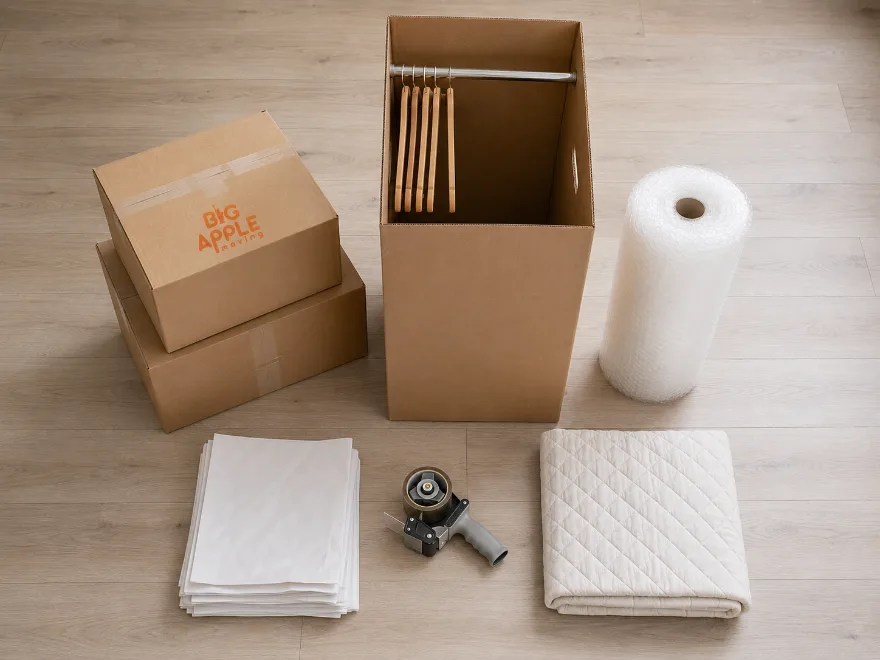
Make a personal bag before the storage cartons are closed. Include identification, essential medication, keys, chargers, current paperwork and the equipment you need for daily work. Decide where it will stay while the household goods are away.
BAM’s storage access terms allow access by appointment, with advance notice and subject to availability. Handling fees may apply to retrieval of specific items. Confirm timing and any charges before relying on access; keep anything needed urgently in your personal bag.
Planning the move and the storage gap together? See full-service storage in NYC for the service overview, then discuss your inventory and access needs before pickup.
Use the Right Route for Batteries and Household Chemicals
NYC DSNY says rechargeable and lithium-ion batteries must not be placed in household trash or recycling. Use the official battery-disposal guidance to find the appropriate collection route. This disposal rule is not a blanket ban on storing every device containing a battery.
Paint and household chemicals need item-specific handling too. Consult DSNY’s harmful-products guidance before discarding them. Keep the original labels and do not mix products.

Identify it
Read the product label and note the material or battery type.
Check acceptance
Ask the storage provider what is allowed and the collection program what it accepts.
Keep it separate
Do not put unresolved items in the moving shipment while waiting for an answer.
Four Checks for a Storage-Ready Inventory
Storage suitability and climate sensitivity are different questions. Use the climate-sensitive items guide to identify questions to ask; do not treat a general climate-control label as proof of a specific temperature or humidity guarantee.
Read the agreement
Review BAM’s customer service terms and confirm any item-specific acceptance questions in writing.
Send the uncertain list
Name specific items and conditions instead of asking whether “everything” can be stored.
Prepare accepted belongings
Clean, dry, protect and label them according to the agreed plan.
Separate personal essentials
Keep the things you need during the gap with you before the shipment leaves.
What Not to Store — Frequently Asked Questions
BAM’s terms exclude hazardous materials, illegal goods, perishables and items that pose a health or safety risk. Keep living things out of household storage too. Check the written agreement and get an item-specific answer for anything uncertain before packing.
Do not assume so. Food can create spoilage, leakage or pest problems, and providers may prohibit packaged food as well. Ask about the exact item before packing it.
BAM does not accept hazardous materials. Check the product label and ask about any paint or cleaning product before packing; an ordinary carton does not make it acceptable. For items you are discarding in NYC, use DSNY’s material-specific guidance or an approved collection program.
No universal rule covers every device. Battery type, condition and the provider’s policy matter. List the devices and ask what preparation or exclusions apply before including them.
No. Antique furniture is not automatically prohibited. Its condition, finish, packing and environmental needs must suit the storage arrangement. Discuss valuable or delicate pieces before pickup.
Keep them out of a routine household-storage shipment. BAM’s published terms do not confirm acceptance of vehicles or firearms, and hazardous or unlawful goods are excluded. Discuss any lawful specialist requirement separately before booking.
Keep identification, medication, keys, current documents, chargers and daily essentials accessible. BAM’s terms allow access by appointment, with advance notice and subject to availability; handling fees may apply when specific items are retrieved. Do not rely on immediate access for something urgent.
Leave it out of the shipment until the provider answers in writing. Describe the item, its condition and any contents accurately so the decision is based on the actual object.


